It's the depth of winter here, and I've been eating lavashak - which to me is like essence of summer.
Lavashak is a fruit puree dried into thin strips which look (and feel) like leather. In Iranian villages, it is a widely used way to preserve fruit for the winter - it is a nutritious snack and a fantastically flavourful, slightly sour addition to soups and stews. In the pictures below we were processing about 20kg of fruit from our orchard.
Here's how to make it (as taught to me by Mahboobeh, our Kurdish neighbour).
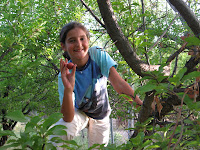
1. Pick a lot of fruit. A good mix is about 50% plums of any colour (for sweetness), 40% apple (for bulk), and 10% sour cherry or albaloo (for colour and sour-ness).
 |
| Picking albaloo |
 |
| Picking different kinds of plums |


2. Wash the fruit and let it dry. You don't want any excess water.
3. Boil it all up together in the biggest pan you can find. As soon as it's soft, take it off the heat.
 |
| Sieving a batch into a bucket. |
4. Now sieve it all to remove pips and stones and make it as smooth as possible. Keep scraping handfuls of the fruit around the sieve to get as much of the pulp out as possible. You might get tired of sieving it and end up chucking out some of the pulp with the stones (as I did). You should end up with a handful of stones and skins - throw these away.
5. Boil it all up again, this time for longer - the aim is to boil off as much water as possible without the thick fruit concentrate sticking and burning to the bottom of the pan. Do not add sugar - if you've chosen your fruit well, you don't need any other ingredients.

 |
| Laying down the non-stick baking paper |

7. Pour your fruit puree onto the prepared sheets.


8. Spread it out evenly so that it is not more than about 3mm thick (like tomato paste on a pizza base).

9. Leave it in full sun for about 2-3 days (in Iran). In the UK you might need to put it on trays in an Aga or airing cupboard, unless you have guaranteed 7-10 days of sunshine. Protect from dust, flies, pets, birds, and accidental watering with mosquito netting or similar.
10. When it's ready (it peels away in one piece and doesn't break unless you tug hard), cut up the lavashak into strips or convenient pieces for storing in a tin or plastic box. It doesn't need to be in the fridge. We made about 5kg on this occasion which is a lot, believe me.


